As Things Stand
Info
-
Title : As Things Stand.
-
Year : 2026.
-
Medium : Sculpture, textiles, motorized rotation, multichannel sound, spoken word, electronic composition, Oja flute, live LED news feed, and custom electronics.
-
Duration : looped; continuous installation.
Details
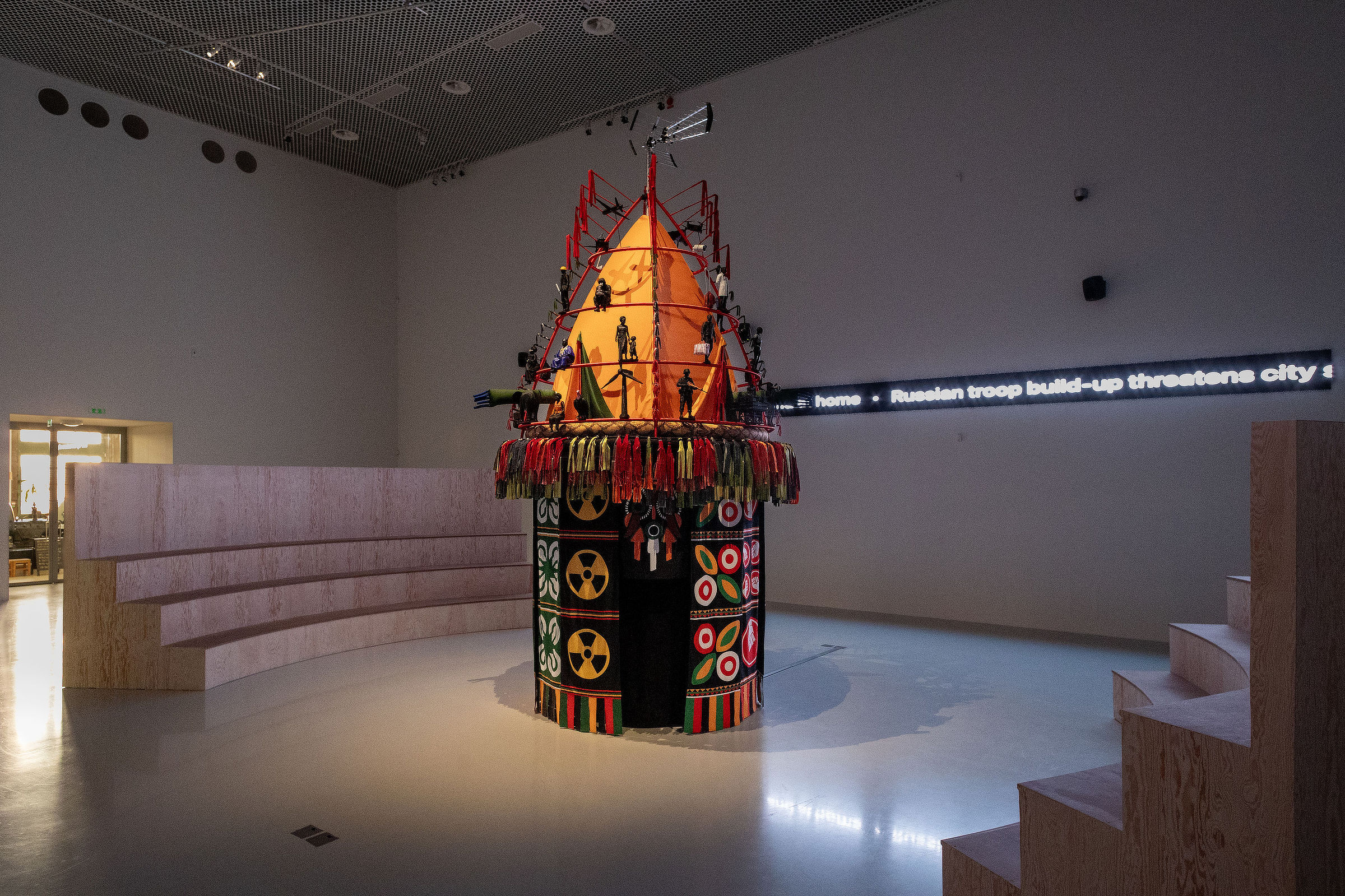
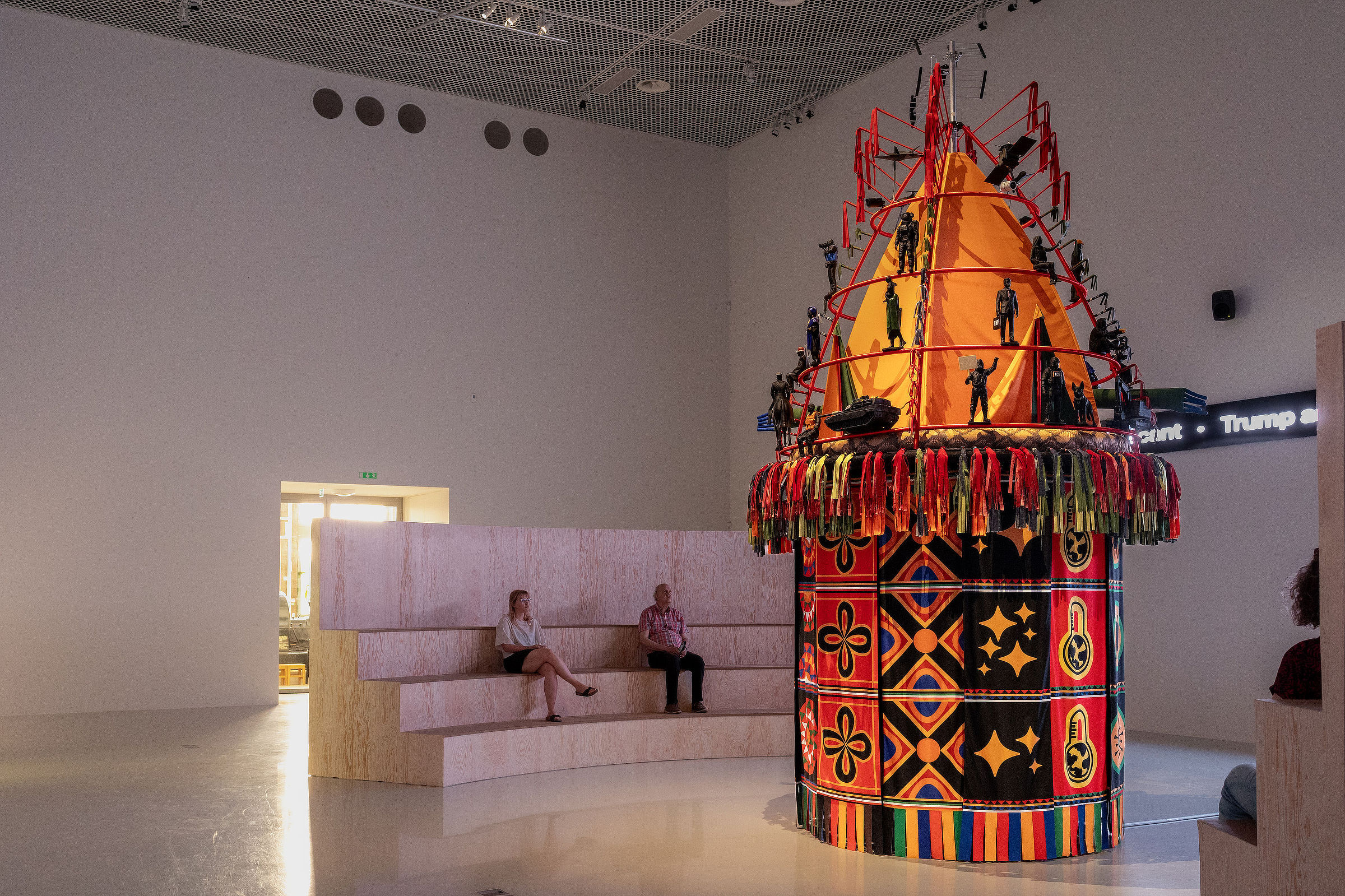
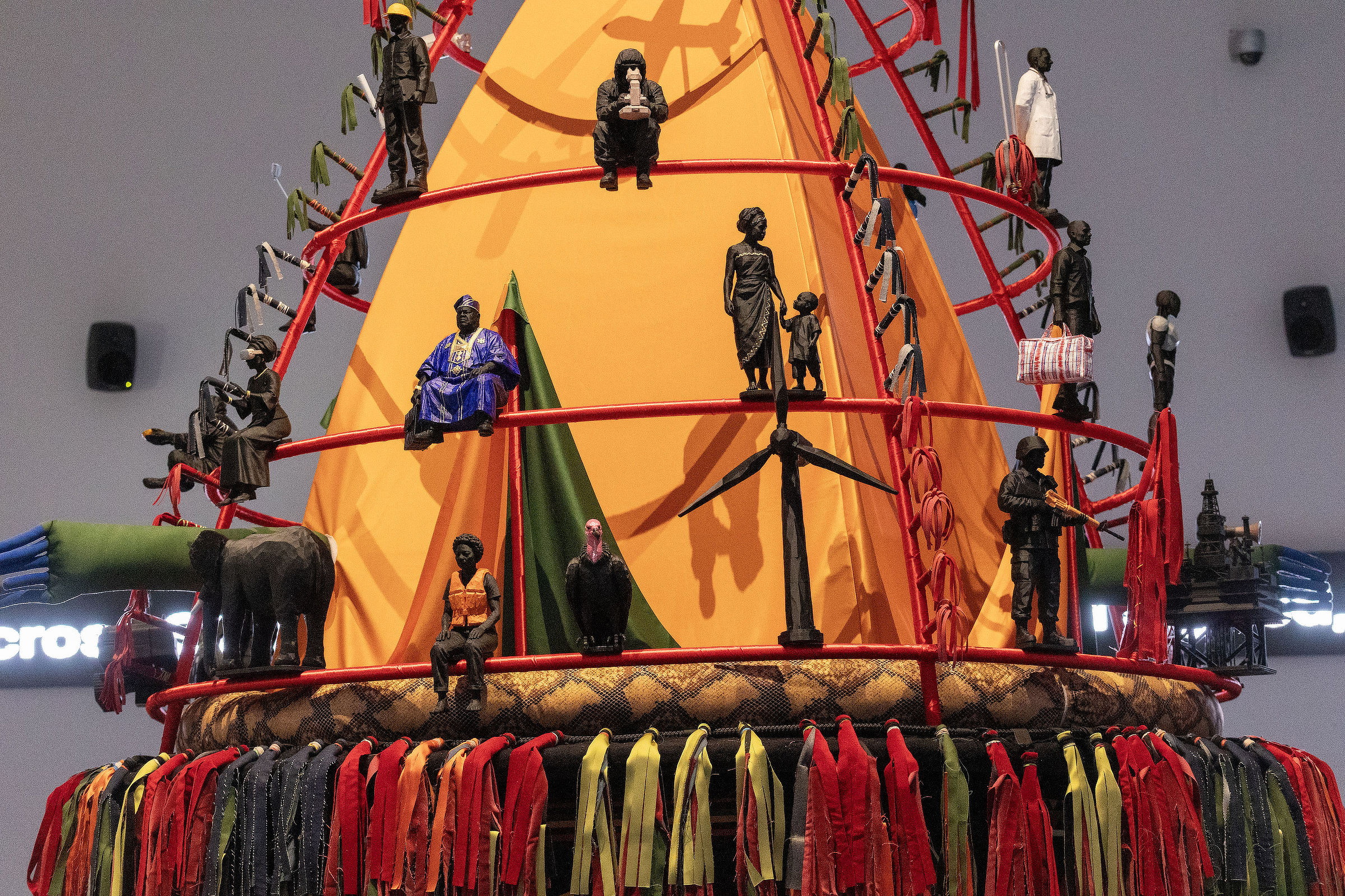
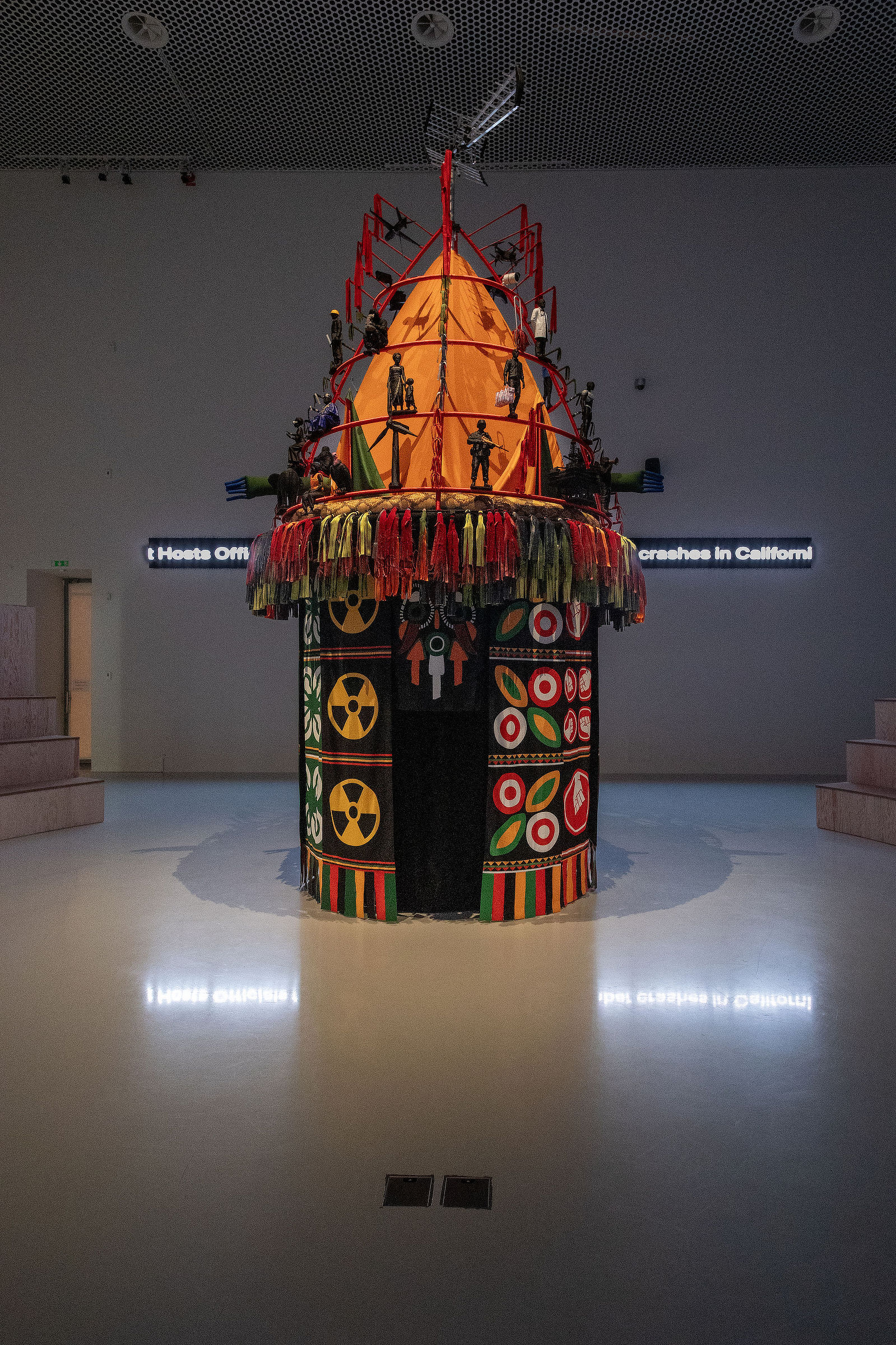
In parts of south-eastern Nigeria, there is a masquerade that is less worn than inhabited. The Ijele is a monumental composite structure bringing together human figures, animals, spiritual forces, histories, social roles, symbols, music, and movement within a single form. Historical examples also incorporated figures associated with changing systems of political and social power.
What is most consequential about the Ijele is not simply its scale, but what it is capable of holding. Different registers of experience are brought into proximity without being reduced to a single category. The present becomes part of the world being assembled.
As Things Stand begins from this organizing logic. The work approaches the Ijele not as an object of tradition to be reproduced, but as a model of knowledge, asking what such a structure might contain if it were assembled now.
Migration. Artificial intelligence. Climate breakdown. Financial systems. Communication networks. Borders. Surveillance. Care. Labour. Grief. Hope. Not as isolated subjects, but as parts of the same world.
This question takes on particular urgency in a contemporary world increasingly encountered through fragments. A war arrives as a headline. A flood as satellite imagery. A financial crisis as a graph. Artificial intelligence as a software update. Human displacement as numbers crossing a screen. The difficulty is not simply an excess of information, but the difficulty of holding information together long enough to perceive how things belong to one another.
The Sculpture:
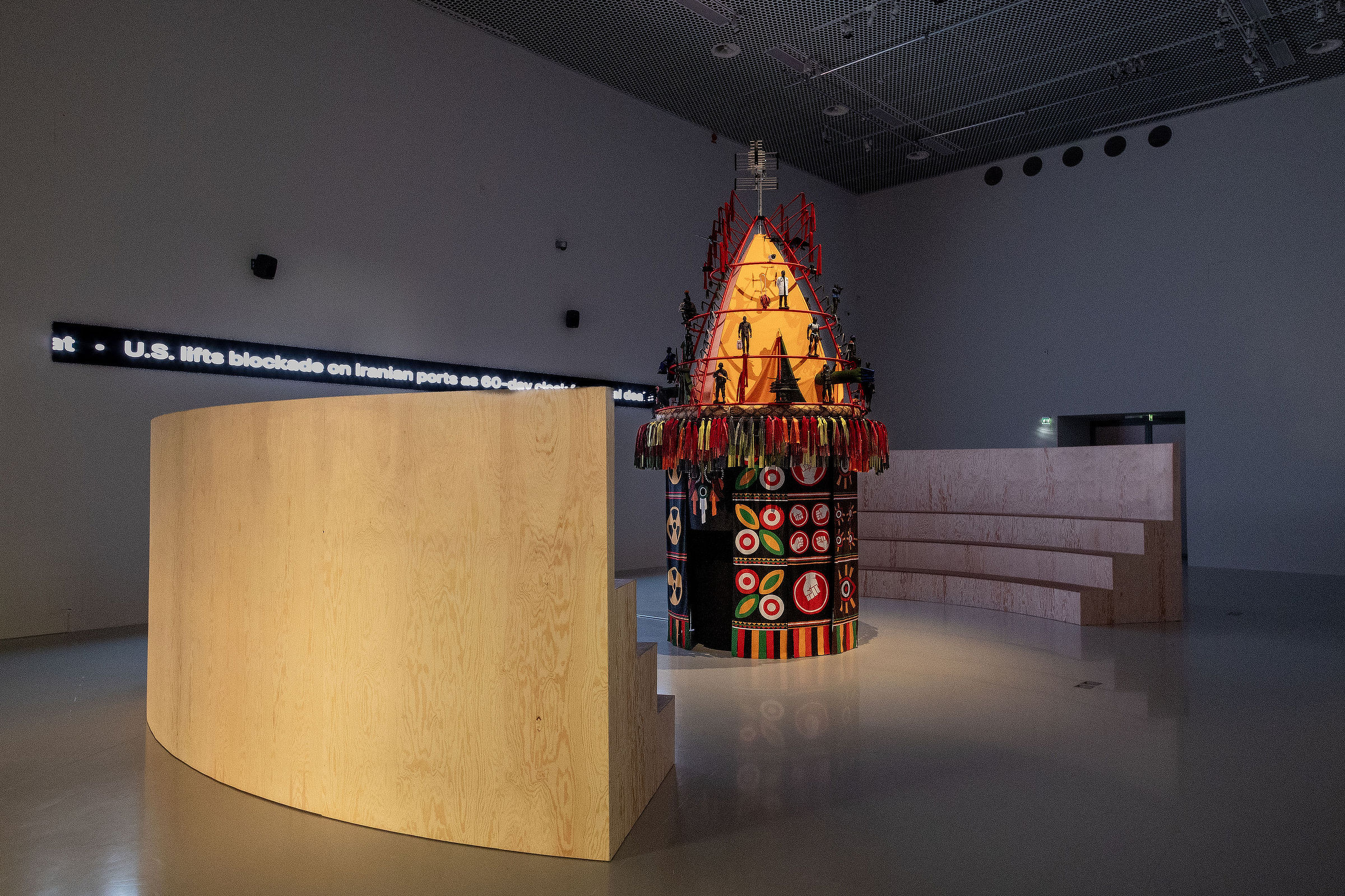
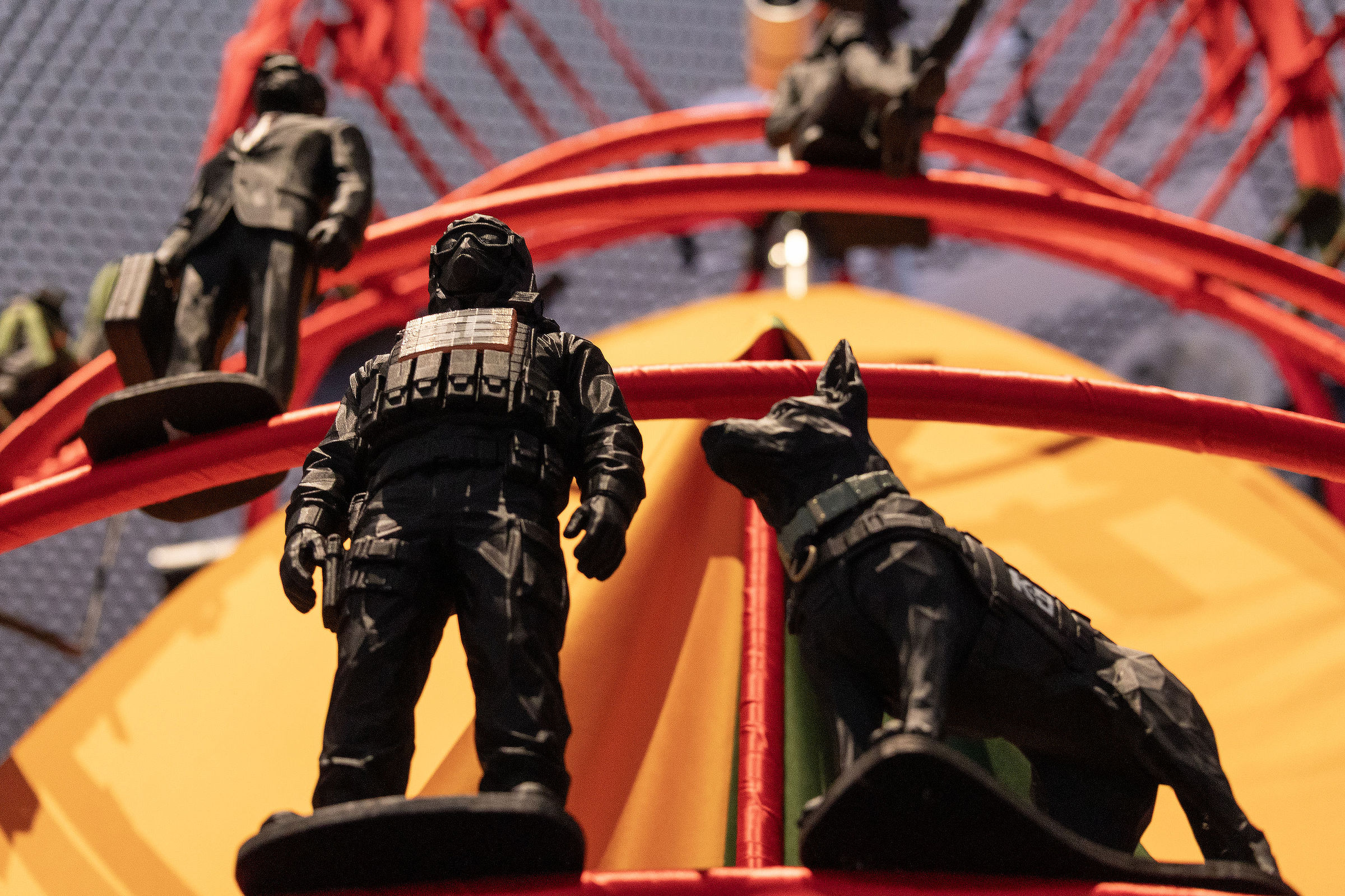
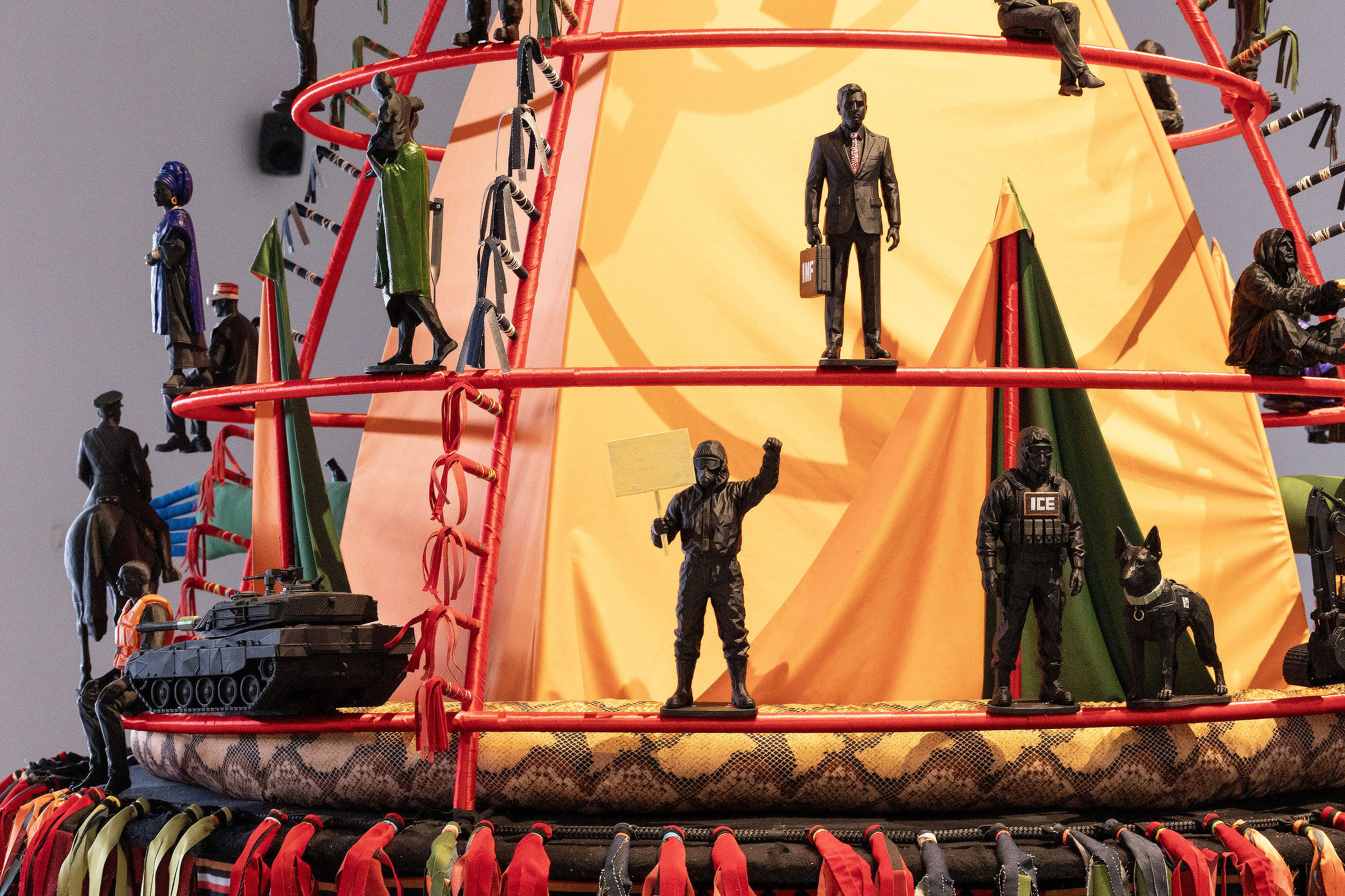
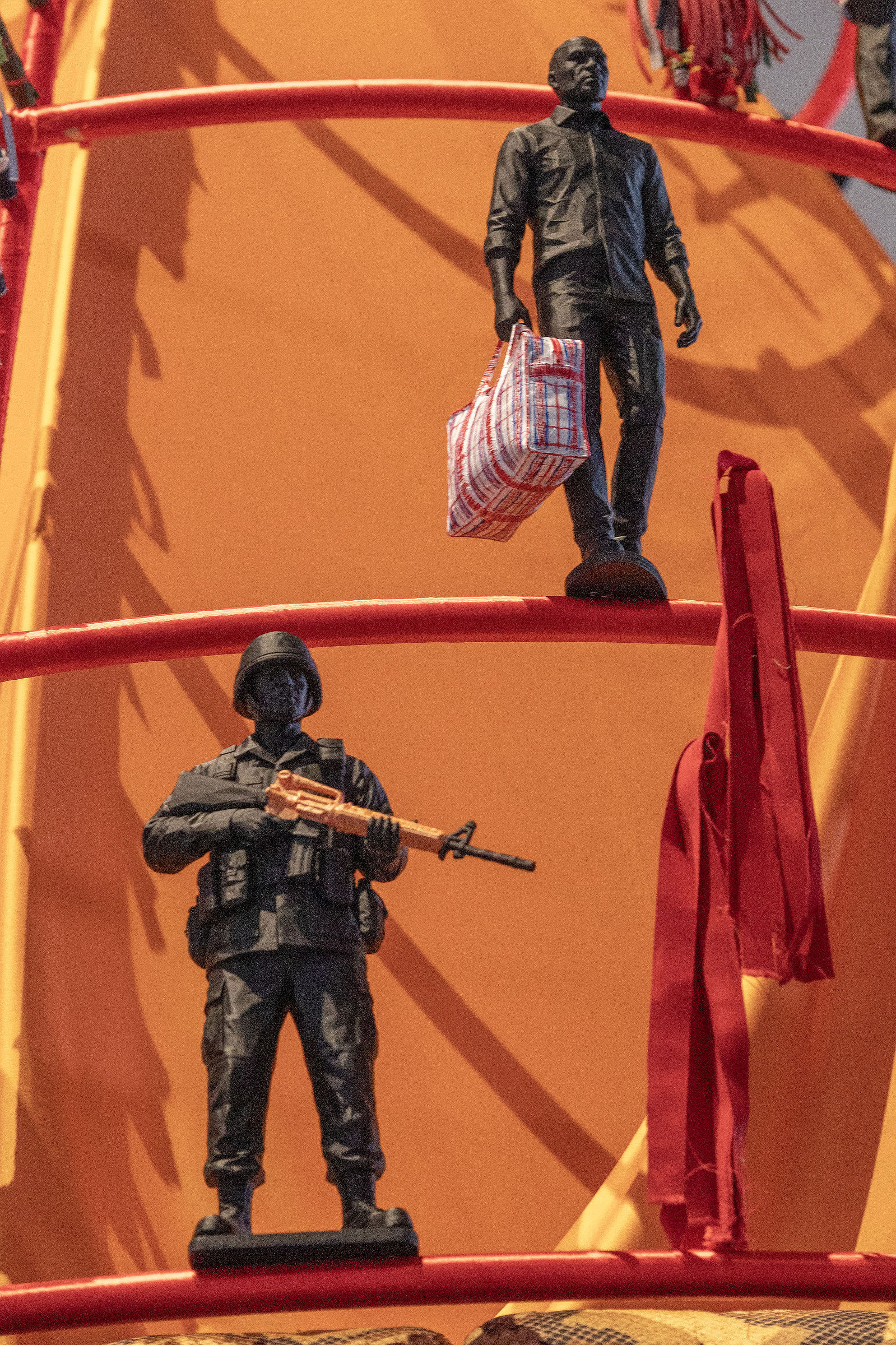
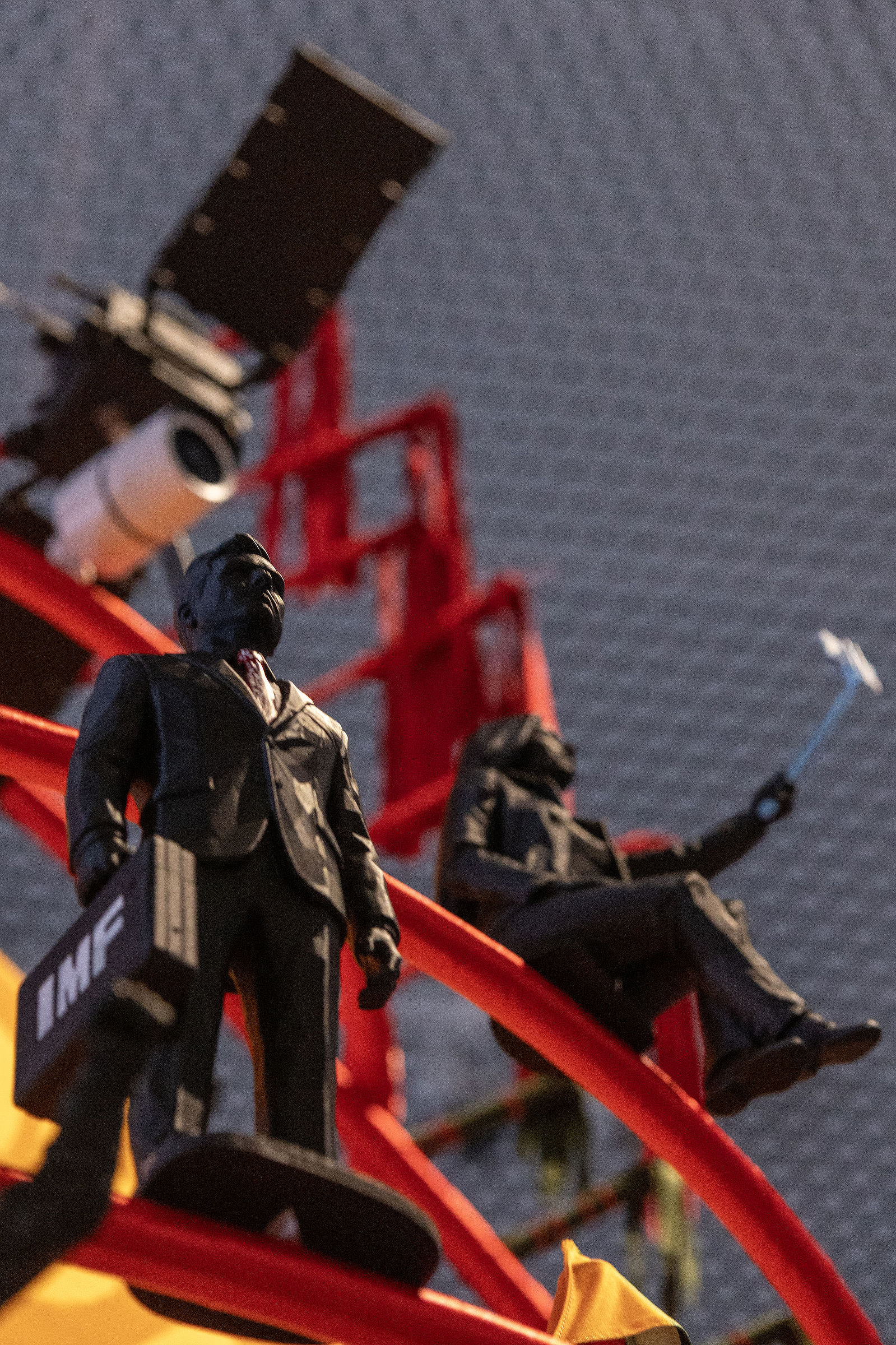
The sculpture gathers fragments of this world into a single structure. Human figures coexist with animals, technologies, infrastructures, and symbols of power. An elephant with its tusks sawn off and a vulture appear alongside excavators, oil rigs, satellites, drones, and other systems of extraction, observation, and communication. Elsewhere, a wealthy woman occupies the same structure as a beggar; protesters coexist with soldiers and agents of border enforcement; mothers and children appear alongside politicians, doctors, scientists, and the press.
These are not separate stories. Their meaning emerges through proximity – through the tensions, dependencies, contradictions, and unexpected relationships revealed by their coexistence.
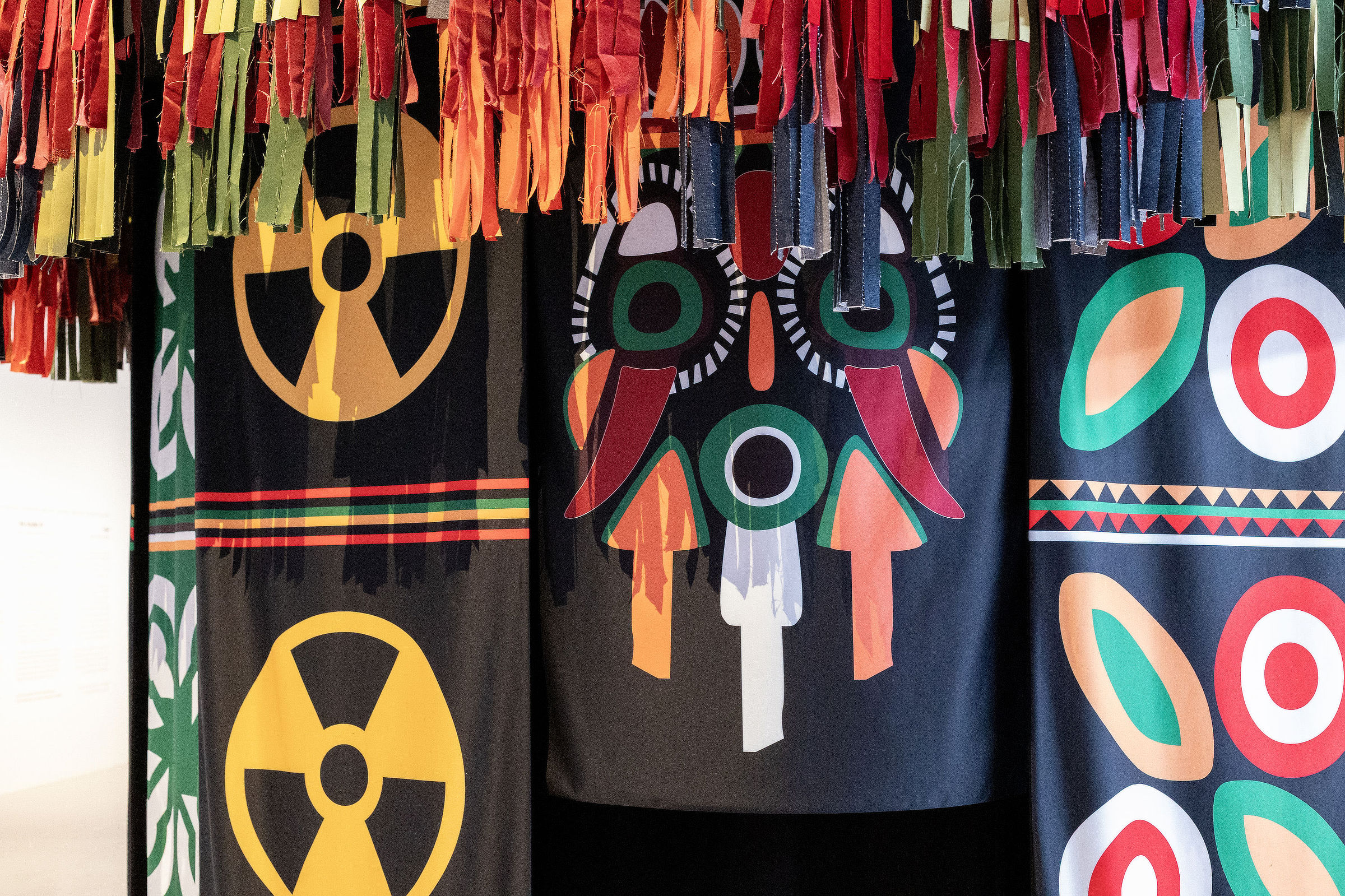
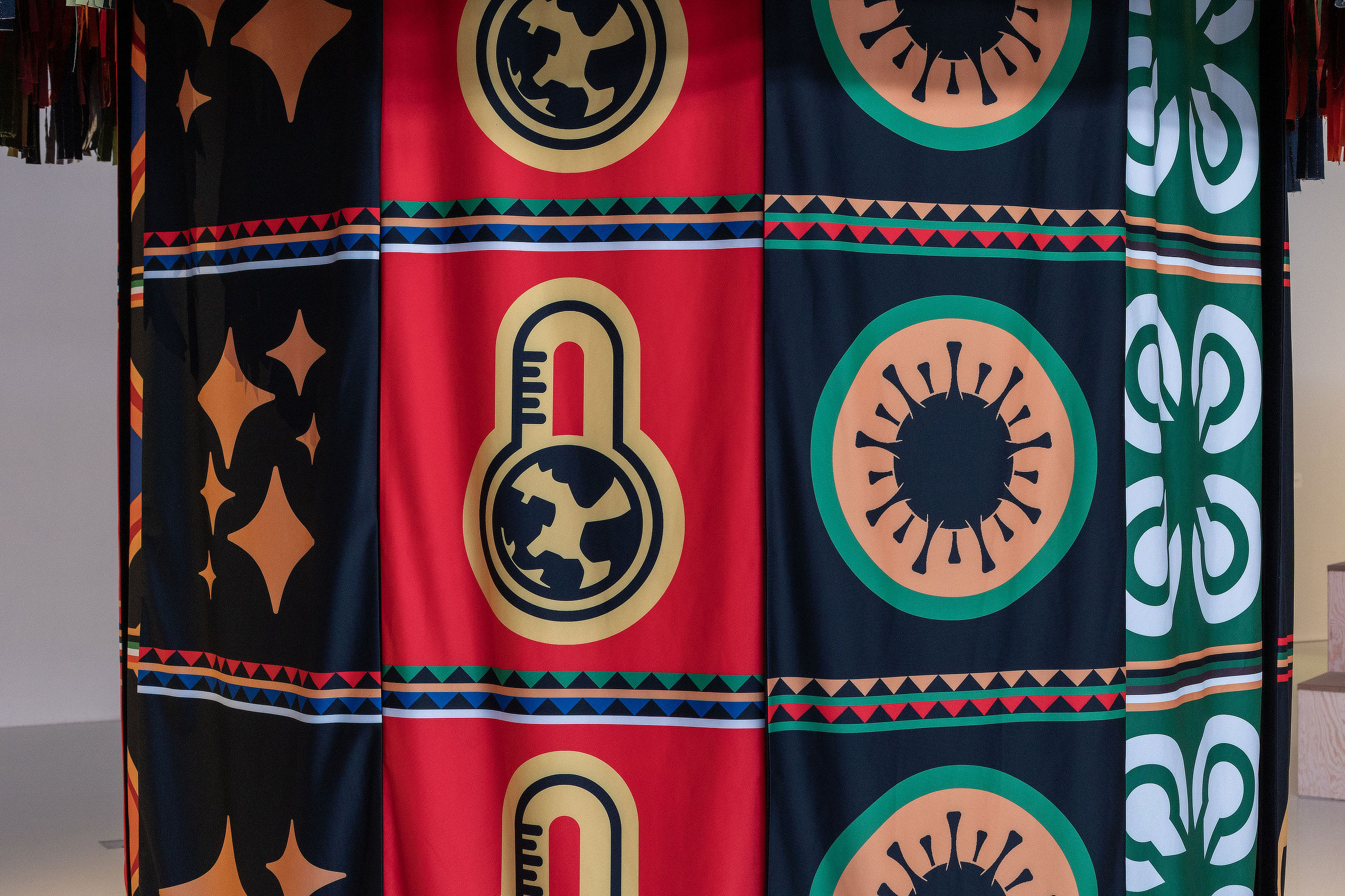
If the figures enact this gathering, the fabric inscribes it. The textiles extend the same logic through patterns reworked to register contemporary forces and anxieties. Motifs associated with cryptocurrency, global warming, nuclear power, and communication technologies enter the surface of the work as recurring signs.
The sculpture functions, in this sense, as a cosmogram: a structure in which multiple dimensions of a world are gathered into physical form so that their relationships can be encountered.
Much contemporary culture makes complexity legible through mapping, data visualizations, network diagrams, and digital interfaces. As Things Stand proposes another possibility.
It does not map the world; it gathers it.
The Sound:
Around the sculpture unfolds a spoken meditation on climate breakdown, migration, artificial intelligence, inequality, conflict, environmental degradation, care, and endurance. Drawing on the moral cadence of Igbo prose and traditions of oral storytelling, the text turns information toward reflection and events toward questions.
The text is performed by a voice and accompanied by an electronic ambient composition and the Oja flute. Within the installation, the Oja functions as a call, gathering attention through sound rather than explanation.
The Feed:
A live LED news feed carries selected headlines from around the world, introducing events as they continue to unfold. Within the installation, this continuous flow meets the slower rhythms of sculpture and sound.
The sculpture completes a slow 360-degree rotation every twenty one minutes. The spoken word and musical composition unfold across the same duration. The news feed changes continuously.
These temporalities never fully coincide.
The sculpture returns to its point of departure. The spoken meditation reaches its conclusion. The headlines have already changed. The world has moved on.
The sculpture moves through cyclical time. The spoken word unfolds through reflective time. The feed registers the acceleration of the present. Visitors inhabit these rhythms simultaneously, experiencing the contemporary as overlapping durations rather than a singular flow.
As Things Stand
The title refers both to the condition of the world as it exists now – provisional, unsettled, still unfolding – and to the physical act of standing.
The sculpture stands. The figures stand.
To stand is to occupy a position within forces larger than oneself: to remain present without certainty, to endure without pretending that resolution has arrived.
In a world increasingly encountered through fragments, As Things Stand asks whether gathering might itself become a form of knowledge: whether understanding begins not with possessing more information, but with bringing its fragments into proximity so that their connections, contradictions, and dependencies can become perceptible.
The world does not become complete through this gathering.
It is held together long enough to think with.
Request full project dossier
Fix Margin 40px