Trading Places
Info
-
Title : Trading Places
-
Year : 2024
-
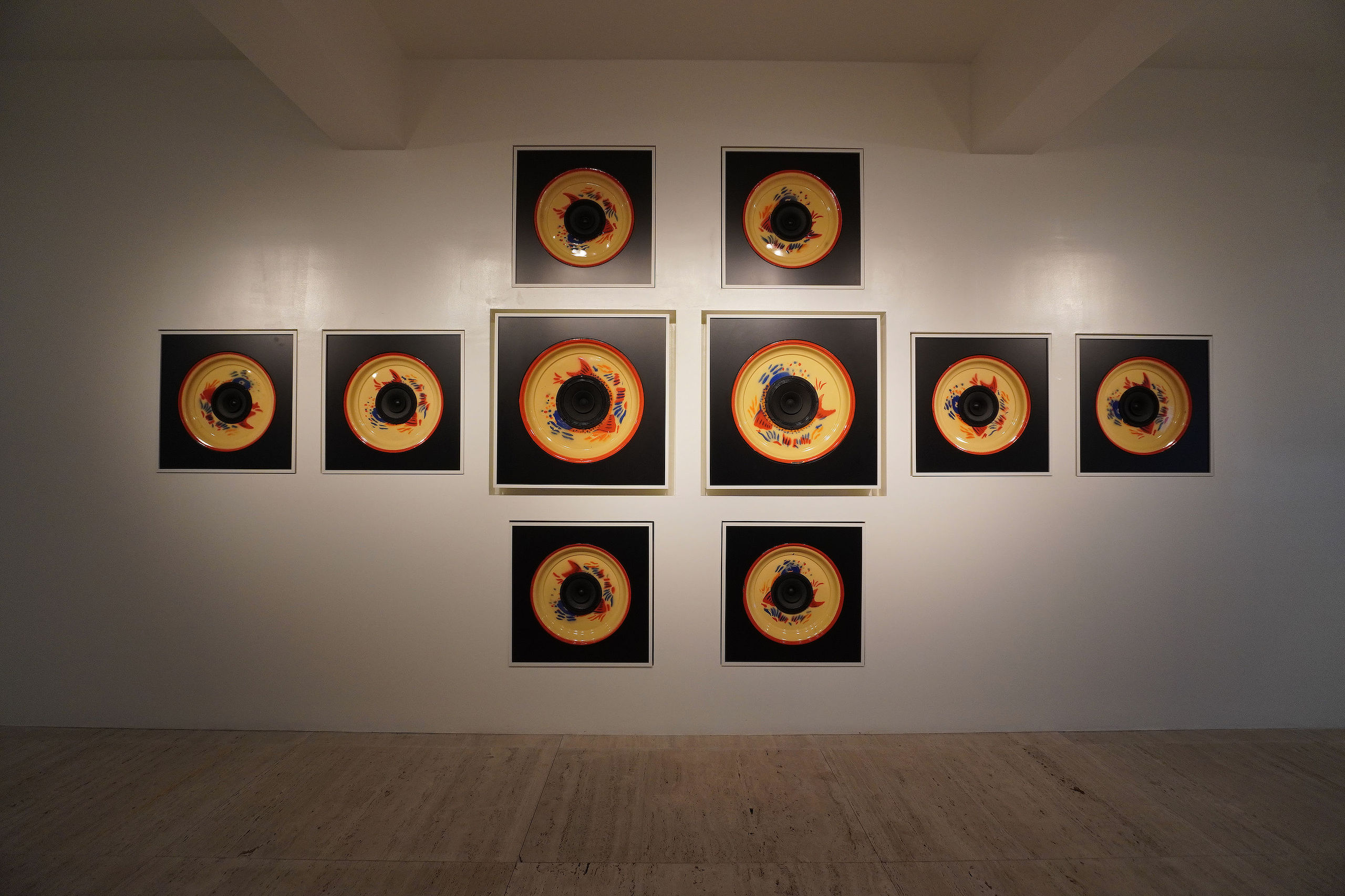
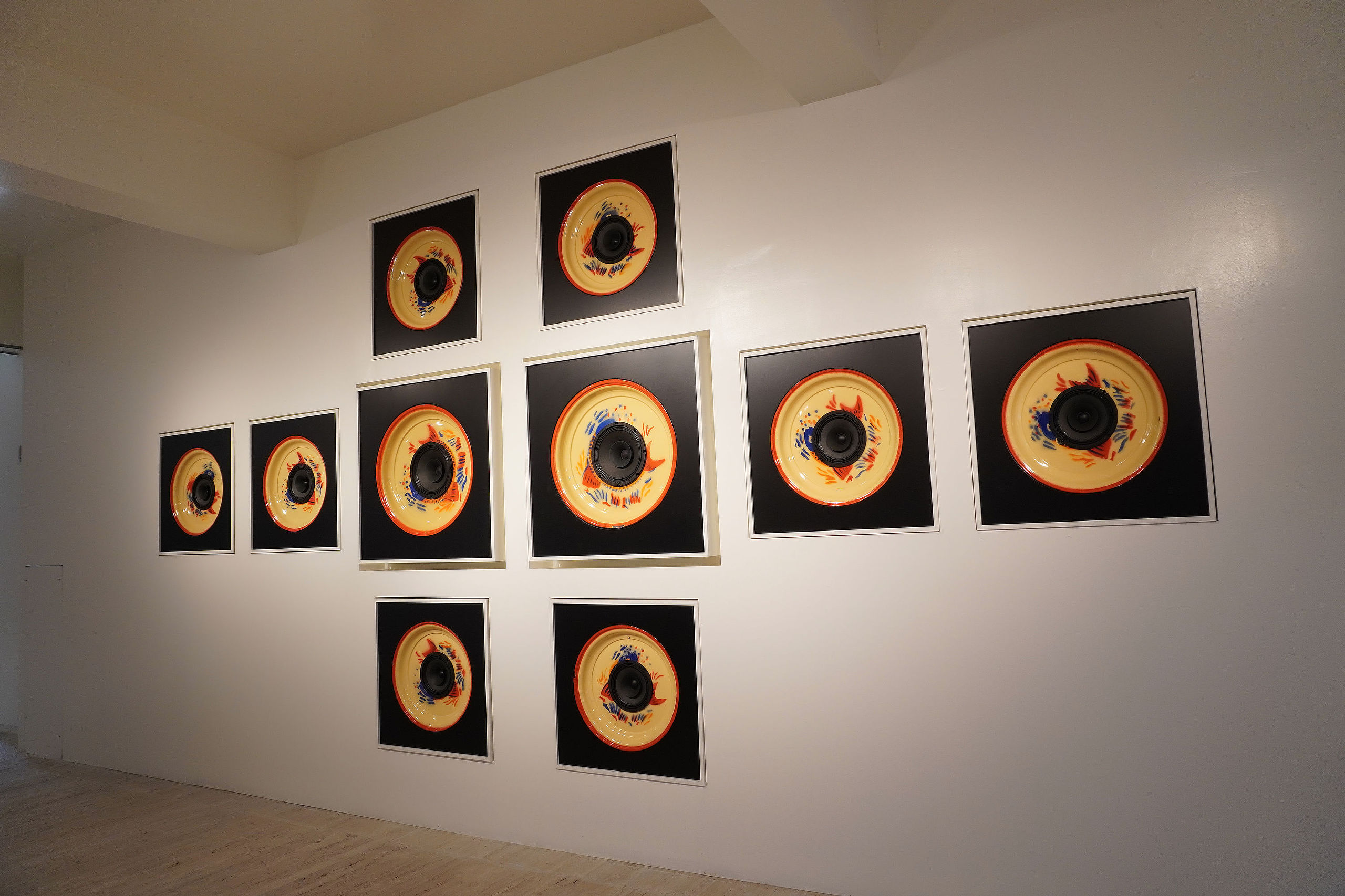
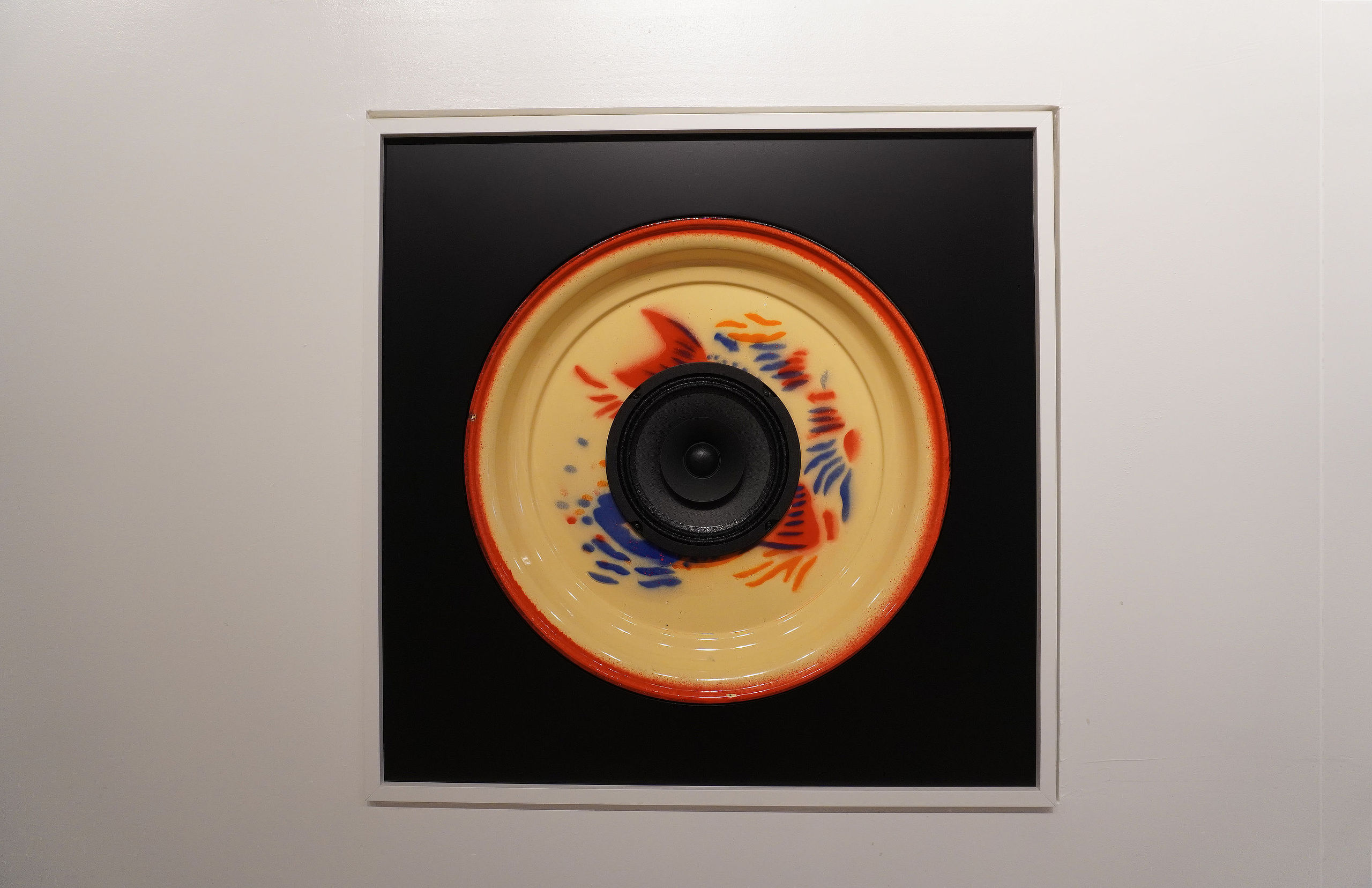
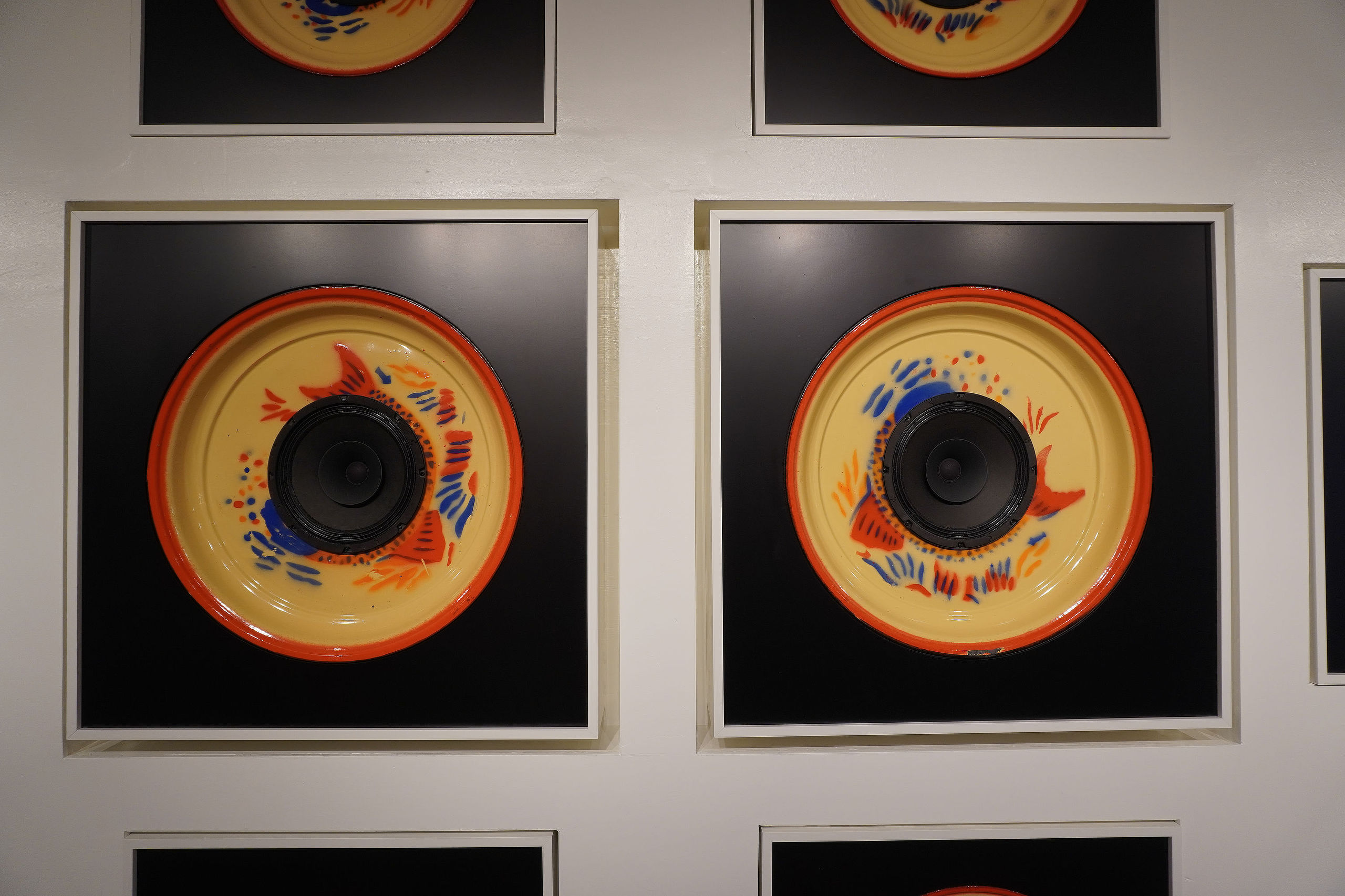
Medium : Sound installation comprising ten sculptural sound trays with embedded loudspeakers.
-
Duration : Variable.
Details
Trading Places is a sound installation that brings together two very different economies of exchange: the street-level commerce of hawkers and market traders, and the accelerated financial activity of stock-exchange trading floors. Through field recordings, electronic composition and sculptural sound objects, the work places these distinct systems of trade in sonic and material proximity.
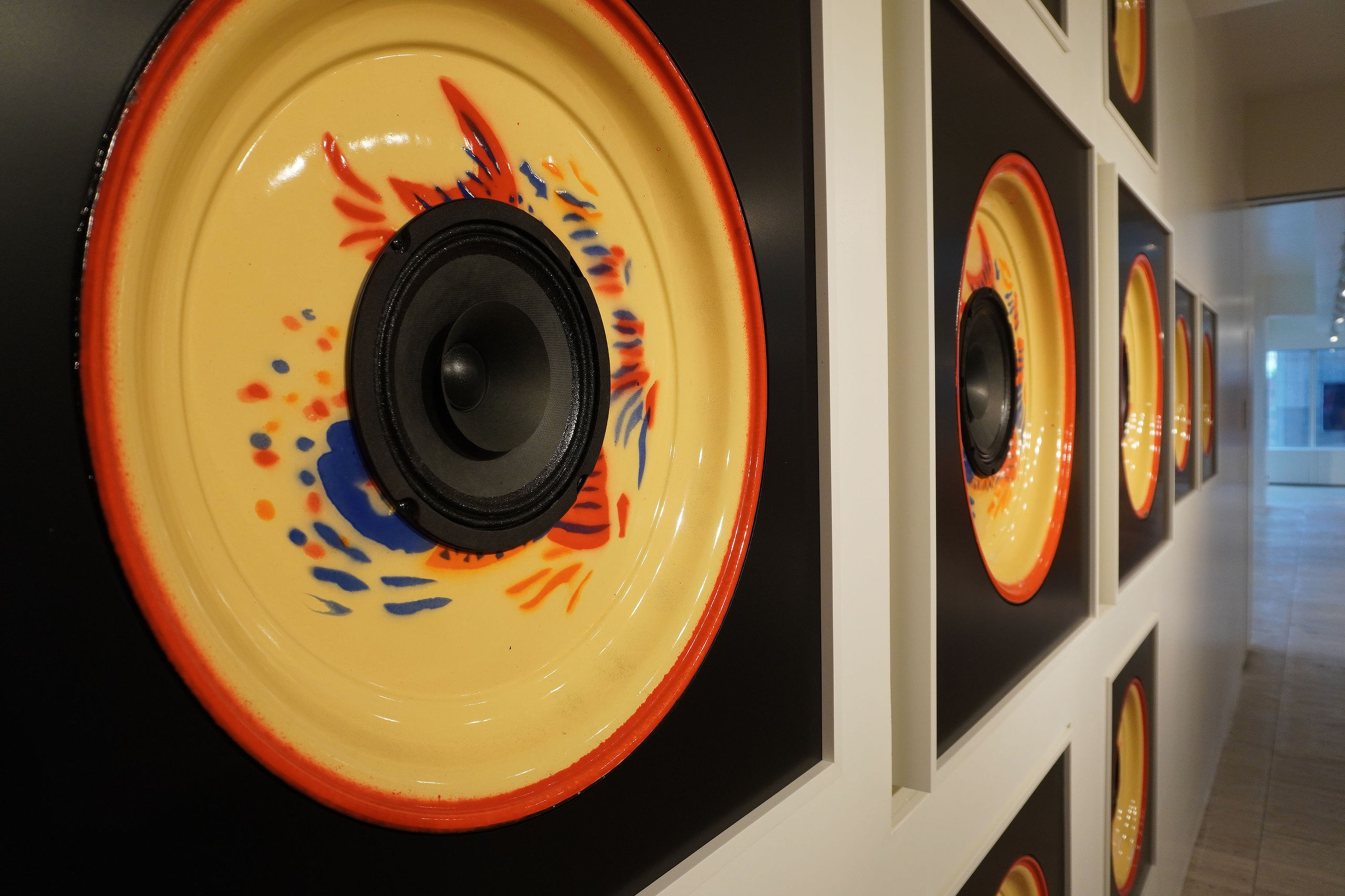
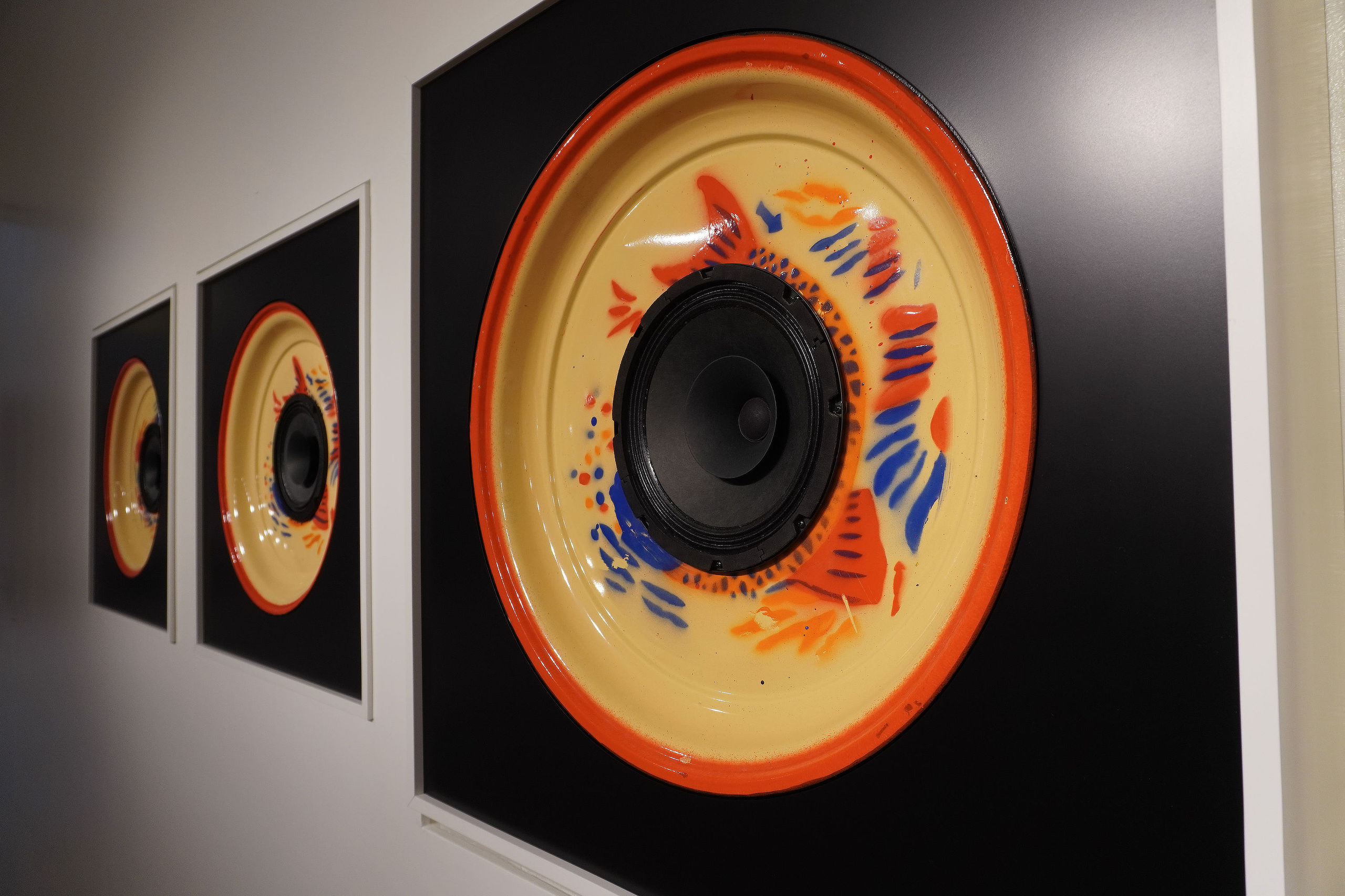
The project develops from an earlier sculptural language established in Market Symphony, in which enamelware trays associated with traditonal African markets were transformed into loudspeaker surfaces carrying recordings of market life. In Trading Places, the tray is reconfigured again. Rather than being embedded within the exhibition architecture, each metal hawker’s tray is fitted with a loudspeaker and housed within its own wooden enclosure, becoming an autonomous sculptural object as well as an acoustic device.
The installation combines recordings of street hawkers – their calls, negotiations, repetitions and improvised rhythms – with the dense acoustic environment of financial trading floors. Electronic composition moves between and through these materials, creating relationships between forms of exchange that operate at radically different scales yet depend on many of the same fundamental actions: buying, selling, speculation, persuasion, competition and the attribution of value.
Voice is central to both environments. In the street, the hawker’s call announces goods, attracts attention and negotiates directly with the surrounding public. On the trading floor, spoken language operates through another vocabulary of prices, orders and transactions. In both cases, economic activity becomes audible through rhythm, repetition, urgency and human interaction.
The sculptural form extends this relationship. The metal tray remains recognisable as an everyday tool of mobile commerce, carrying traces of the informal economies from which it originates. Its placement inside a more rigid wooden structure introduces another visual register, shifting the object towards the controlled architecture and institutional language associated with formal systems of finance.
Rather than collapsing these economies into an equivalence, Trading Places allows their differences and correspondences to be heard alongside one another. The work moves between the intimate scale of a single voice selling goods in public space and the abstract networks through which enormous financial values circulate.
Through this convergence of sound, object and composition, Trading Places approaches economic exchange as something that is not only calculated but also performed – through voices, gestures, rhythms, materials and the spaces in which transactions take place.
Fix Margin 40px